SECOND META-REFLECTION

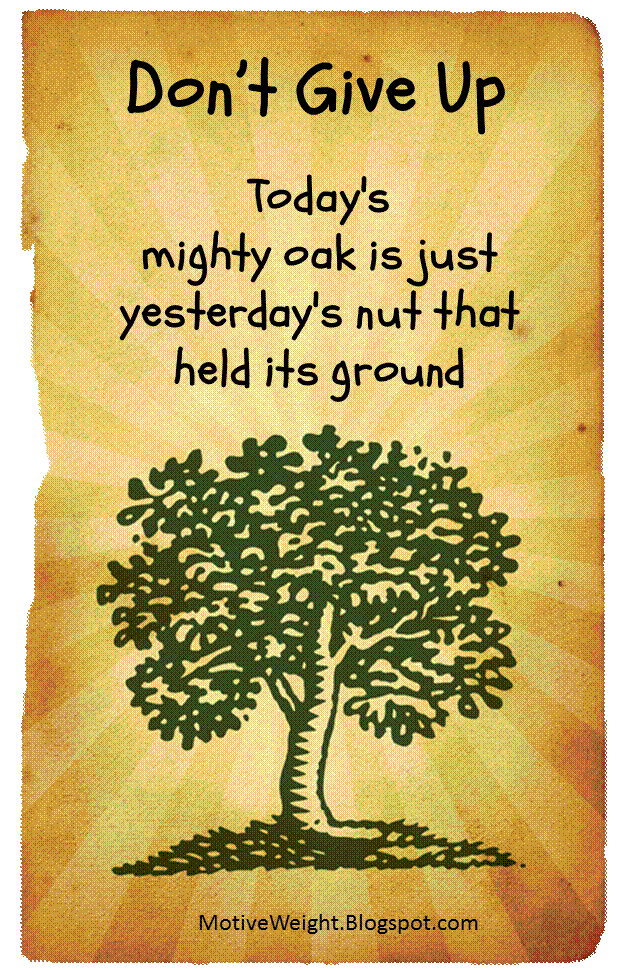
Having a greater sense of one's own identity helps to strengthen a person's resiliency, and ability to overcome, or handle stressful situations.
In examining topic eight on "Identity” and relating it to topic eleven on "Resilience" one could suggest that the greater the sense of identity, the greater the chance of resiliency.
Resiliency is being able to cope, handle, or get through stressful situations or as the more "nuanced" definition from class defines it as "a sustainable process, a capacity, and an outcome of affectively adapting in the face of tremendous adversity or trauma and significant threat to personal welfare, health, safety and security" (Resilience power point, slide 6, 2016). The link between this nuanced definition and identity is apparent when we consider what are the factors that can help an adolescent through this process.
Identity is defined by how one views and/ or thinks about oneself and it also relates to how others view and think about them. Therefore, two factors related to identity that can effect someone's resiliency is how someone views themselves and how others view that person. In fact, in our lecture topic on Identity we looked at evidence from a study conducted by Baumeister et al. (2003) where it concluded that "high self-esteem does not reliably cause improvements in academic performance, but that it does improve persistence in the face of failure" (Identity power point, slide 5, 2016). When someone has a positive sense of their identity and high self esteem, they are more likely to sustain through the stressful process.
As a teacher, I can help foster a strong and positive sense of identity in my students so that they will be more resilient to stressful situations. As a result of fostering the development of identity and resiliency, I will have a better relationship with students and their development will influence me to create a safe, warm, and caring environment so that students will feel secure enough to be who they are.
Also , in creating this type of learning environment there will be zero tolerance for any bullying or disrespect because students need to be free to develop a strong sense of who they are and in the end feel good about who that person is. In doing this fostering, I will plan many projects and activities that relate learning to who they are as individuals and build up their self esteem so that when they do in the future encounter a process that they need to sustain themselves through, that it will be easier for them because they will have more belief in who they are as a person.
I can help foster a students sense of having a positive identity is by learning about what makes that student happy, confident, and feeling respected. Some resources that I can use to help in that regard are the ones that I mentioned in the tab "Topic 8: Identity" of this e- portfolio, which includes the book |"The Five Love Languages" by Gary Chapman and also the color-personality test that students can take to help them discover who they are. My hopes with this personality test for example who be that the student would acquire some positive beliefs about themselves by reading positive adjectives that the test produces after analyzing the student's personality.
When the student sees that the test has described them as" witty and caring for instance, these may be characteristics that the student would admire in someone else but would not have had the ability to attribute these characteristics the themselves because their self image is too low. However, if a test gives these characteristics back as results, students might be more likely to internalize those ", attribute positive traits because they are viewed as "scientific", or based one an empirical "algorithm", which could then raise their self esteem and further increase their chance for resilience through stressful situations.
Recommended Activity: The Color-code Personality Test: A fun and useful resource for adolescents to learn about themselves.
Resources:
Baumeister, R. F., Campbell, J. D., Krueger, J. I., & Vohs, K. D. (2003). Does high self-esteem cause better performance, interpersonal success, happiness, or healthier lifestyles? Psychological Science in the Public Interest, 4, 1-44. (cited in "Adolescence" Textbook).
Chapman, G. D. (1995). The five love languages: How to express heartfelt commitment to your mate. Chicago: Northfield Pub.
https://www.colorcode.com/personality_test